


Are the U.S. and Iran Moving Toward Peace or Back to War?
Tensions between the United States and Iran remain dangerously fragile as both sides continue diplomatic negotiations while exchanging military warnings and limited strikes across the Middle East.
Although a ceasefire reached on April 8 is still technically in place, recent military incidents and escalating rhetoric have raised fresh concerns about whether Washington and Tehran are truly moving toward peace — or edging closer to another major conflict.
Ceasefire Under Pressure Amid Fresh Military Clashes
The latest developments have tested the already fragile ceasefire agreement that ended weeks of intense fighting between the U.S., Israel, and Iran.
This week, U.S. Central Command (CENTCOM) confirmed strikes on what it described as a “ground control site” in the Iranian port city of Bandar Abbas. American officials said the operation was defensive in nature and necessary to protect regional security.
Iran quickly condemned the attack, warning that “aggression will not go unanswered.”
Soon afterward, Iran’s Islamic Revolutionary Guard Corps (IRGC) claimed responsibility for an attack targeting a U.S. air base in the Gulf region. While Iranian officials did not specify the location, CENTCOM later confirmed that a ballistic missile was intercepted over Kuwait, where the United States maintains several military installations.
The U.S. military labeled the missile launch “an egregious ceasefire violation.”
Conflict Still Far Below Full-Scale War
Despite the sharp exchange of military actions, analysts say the current situation remains far less severe than the full-scale confrontation seen earlier this year.
During the height of the conflict, the U.S. and Israel launched thousands of air operations targeting Iranian military infrastructure, while Tehran responded with waves of drones and ballistic missiles aimed at American bases, Gulf nations, and Israel.
Compared to that period, the latest attacks appear more limited and controlled.
Military experts believe both sides are trying to avoid a complete collapse of diplomatic negotiations, even while demonstrating strength and deterrence through carefully calculated actions.
Strait of Hormuz Remains a Major Flashpoint
The Strait of Hormuz continues to be one of the biggest sources of concern in the region.
The U.S. military said Thursday that American forces shot down five Iranian drones considered a potential threat near the strategic waterway. The narrow shipping route is critical for global oil transportation, and any disruption could send shockwaves through international energy markets.
Security around the Strait has become increasingly sensitive as both nations attempt to balance military pressure with ongoing negotiations.
Trump Says He Is “Not Satisfied” With Deal Terms
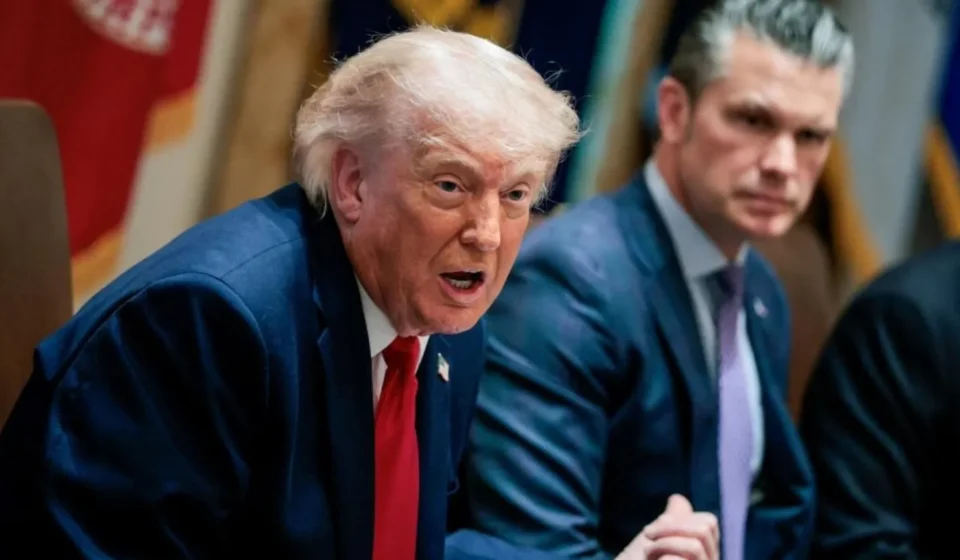
U.S. President Donald Trump added further uncertainty by saying he remains “not satisfied” with the current terms of a possible agreement with Iran.
While diplomatic discussions are reportedly making progress behind the scenes, officials from both countries continue to signal major disagreements over sanctions, regional influence, and Iran’s nuclear program.
Iranian leaders have also accused the U.S. of sending mixed messages during negotiations, complicating efforts to finalize a long-term agreement.
Diplomacy Continues Despite Rising Tensions
Even with the latest confrontations, neither side appears eager to return to all-out war.
The recent military exchanges are widely viewed as tactical pressure rather than signs of an immediate large-scale conflict. Diplomats from several countries are still actively working to preserve the ceasefire and push both sides toward a broader political settlement.
For now, the Middle East remains in a tense and uncertain position — balanced between fragile diplomacy and the constant risk of renewed escalation.